Status AI vs CrushOn.AI: Social Simulation vs Character Roleplay
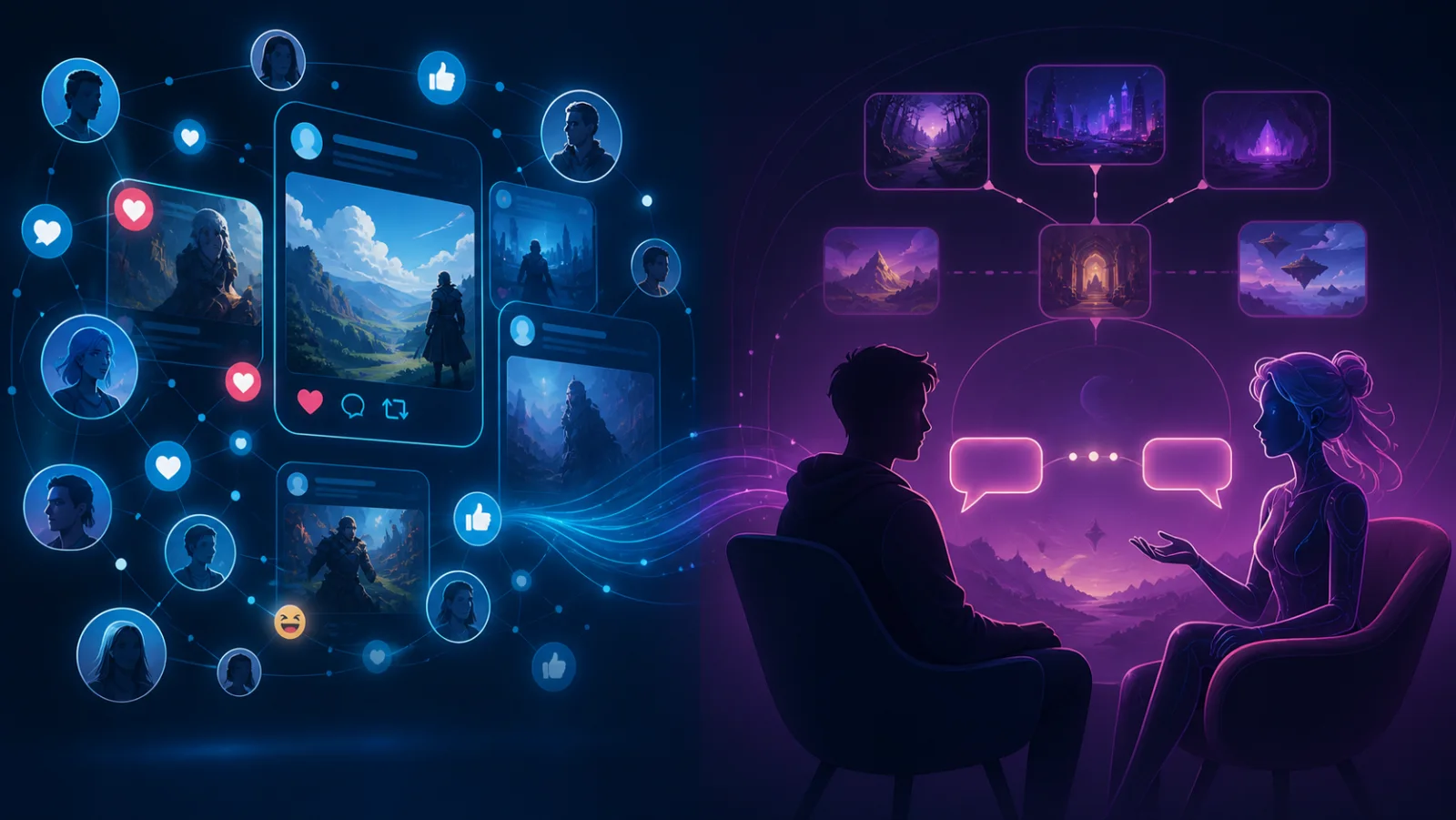
Status AI and CrushOn.AI can both place fictional characters at the center of an interactive experience, but they are not trying to create the same thing. One is best understood as a social simulation. The other is built around direct, open-ended character conversation and roleplay.
That difference affects almost everything: what the user does, how stories develop, which details need to remain consistent, and what a satisfying session looks like. This comparison explains those differences without treating either format as universally better.
The Short Answer
Choose a Status AI-style experience if you want to participate in a simulated social network with posts, reactions, fandom activity, reputation, and the feeling that a wider world is moving around you.
Choose CrushOn.AI if you want to focus on a direct conversation with one character, shape the relationship or scenario, and control an open-ended roleplay more closely.
The right choice depends on whether the user wants a social environment or a character-centered conversation.
What Is Social Simulation?
A social simulation recreates some of the structure of an online community. Instead of only messaging one bot, the user may see posts, reactions, public events, profiles, followers, or fictional trends. The experience comes from participating in a network.
This format can be especially appealing to fandom users. A character does not exist only inside one private conversation; they appear to have a place in a larger environment. A user's actions may influence reputation, visibility, or how other simulated accounts respond.
The strongest social simulations therefore depend on breadth. Multiple characters, public activity, and ongoing events help the world feel active.
What Is Open-Ended Character Roleplay?
Open-ended character chat narrows the focus. The main interaction happens between the user and a selected character. The user may define a relationship, setting, conflict, tone, or ongoing story.
On CrushOn.AI, users can explore existing characters or create one around a specific personality and scenario. The experience can include romance, friendship, adventure, mystery, or another fictional format, depending on the selected character and current platform rules.
The strongest open-ended roleplay depends on depth: clear character motivation, a consistent voice, enough context to preserve the scene, and tools that let the user guide or correct the story.
Status AI vs CrushOn.AI at a Glance
Main experience
- Status AI: participating in a simulated social world.
- CrushOn.AI: holding a direct conversation or roleplay with a character.
Story structure
- Status AI: stories emerge through posts, reactions, fandoms, and public activity.
- CrushOn.AI: stories develop through dialogue, actions, character definitions, and user direction.
User control
- Status AI: control is shaped by the rules of the simulated network.
- CrushOn.AI: the user has more direct influence over the scene, character setup, and conversational direction.
Best fit
- Status AI: users who want public-style activity and a broader cast.
- CrushOn.AI: users who want focused character interaction or longer roleplay scenes.
How Continuity Works in Each Format
Continuity is important in both formats, but the information that matters is different.
In a social simulation, continuity may involve public events, follower relationships, posts, trends, and how different accounts respond to the user. The system has to maintain the sense of a shared environment.
In direct roleplay, continuity is more likely to involve the current location, relationship stage, promises, character motivations, and events from earlier parts of the conversation.
Users should not assume that either type of platform has perfect or permanent memory. A system may rely on recent context, saved character information, summaries, or user-maintained notes. The useful question is whether the product preserves the details needed for its particular experience.
Which Format Offers More Customization?
Customization also means different things in the two products.
Social simulation customization may focus on the user's identity, public role, fandom, or the network they want to enter. The wider environment remains an important part of the experience.
Character roleplay customization often focuses on one personality: how the character speaks, what they want, how they know the user, and which boundaries or scenario rules they should follow. A concise character definition can be more effective than a long list of disconnected traits.
CrushOn.AI is therefore more relevant when the user's main goal is to build or select a particular conversational partner. Status-style simulation is more relevant when the user wants to inhabit a broader social setting.
A Simple Test Before Choosing
Ask what you want to do during the first ten minutes.
If the answer is “browse fictional posts, react to characters, and see how a social world responds,” a Status AI-style simulation is the closer match.
If the answer is “talk to one character, establish a scenario, and develop a relationship or story,” CrushOn.AI is the closer match.
Users comparing paid features should also verify the current product pages directly. Model availability, context limits, voice options, pricing, and content policies can change, so an older review should not be treated as a permanent specification.
Can Someone Use Both?
Yes. These formats are complementary rather than mutually exclusive. A social simulation can provide the feeling of entering a living public world. A direct character platform can provide a more focused space for developing one scene or relationship.
A user might enjoy social activity when they want discovery and variety, then prefer direct roleplay when they want control and continuity. The products solve different interaction problems.
Final Verdict
Status AI is the stronger concept for users seeking simulated social presence, public-style activity, and a broader fictional network. CrushOn.AI is the stronger fit for users seeking direct character conversation, custom scenarios, and open-ended roleplay.
The meaningful distinction is not which platform is “best.” It is whether the user wants to participate in a social system or build a story through one focused conversation.