The Rise of the AI Boyfriend: From Chatbot to Companion
An AI boyfriend is not a person, a therapist, or a substitute for every human relationship. It is an interactive character designed to hold a conversation, follow a role, and respond in a chosen style. That distinction matters. The technology can still create an experience that feels personal, but users should understand what the system actually does—and where its limits begin.
Interest in AI boyfriend chats is part of a broader shift toward interactive character experiences. Some users want romance or fantasy. Others want a writing partner, a low-pressure conversation, or a character who can participate in an ongoing story. The most useful way to evaluate these tools is not to ask whether an AI can become a soulmate. It is to ask whether the character stays coherent, respects instructions, supports the intended scenario, and gives the user enough control.
Why AI Boyfriend Chats Appeal to Some Users
The appeal usually comes from a combination of availability, customization, and low-friction interaction. A user can open a conversation when convenient, choose a character style, and leave without coordinating schedules. That makes the format different from both conventional social media and scripted romance games.
Common use cases include:
- continuing a fictional relationship across several scenes;
- practicing dialogue for a story or roleplay;
- exploring different character archetypes;
- having a light conversation after work or before sleep;
- creating an original character with a particular voice and backstory.
These uses do not prove that a chatbot understands emotions. Large language models generate replies from instructions and available context. A response can feel attentive because it refers to details in the current conversation, but that is not the same as human awareness.
Social Simulation and Open-Ended Character Chat Are Different
Status-style social simulation and open-ended AI character chat can look similar because both involve fictional personalities. The interaction design is different.
A social simulation typically places the user inside a broader network. The experience may emphasize posts, reactions, followers, fandoms, reputation, or public events. The user participates in a simulated social environment.
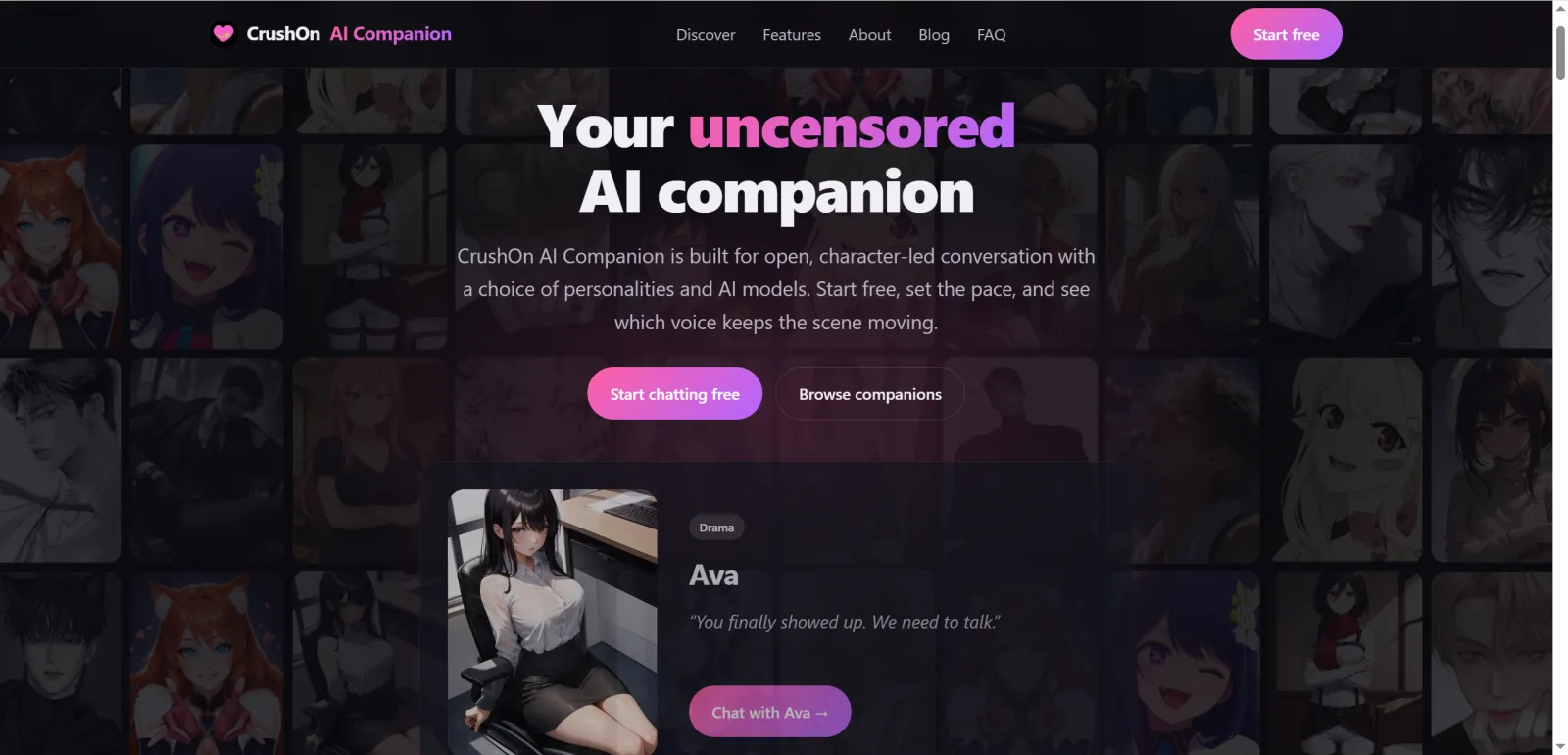
An AI boyfriend chat usually focuses on a direct conversation with one character. The user may control the setting, relationship, tone, and direction of the story. Platforms such as CrushOn.AI are designed around this more open-ended character format, with public characters as well as tools for creating a custom one.
Neither format is universally better. A social simulation may suit users who enjoy a world with visible activity and social feedback. Open-ended character chat may suit users who want longer scenes, direct roleplay, or more control over one relationship arc.
What Makes an AI Boyfriend Character Feel Consistent?
Consistency depends less on adding dozens of adjectives and more on giving the character a clear center. A useful character definition normally answers a few concrete questions:
- What does the character want?
- How do they normally speak?
- What makes them change their tone?
- What boundaries should they respect?
- What facts about the setting must remain stable?
For example, “protective” can mean supportive, controlling, cautious, or possessive. A short dialogue example is often more useful than the adjective alone. The same applies to terms such as cold, playful, jealous, shy, or confident.
A character also benefits from a small number of imperfections. A flawless character may become repetitive because every reply follows the same agreeable pattern. A specific fear, habit, rivalry, or awkward subject gives the story somewhere to go.
Context Is Not the Same as Permanent Memory
Users often describe any reference to an earlier message as memory. In practice, several mechanisms may be involved:
- recent messages still available in the active context;
- a saved character definition or scenario;
- a summary of earlier events;
- manually saved facts or notes;
- information explicitly reintroduced by the user.
This is why a character may recall a detail in one scene and miss it later. No responsible review should promise perfect or unlimited memory. The better question is whether the platform gives users practical ways to preserve the facts that matter.
For a longer relationship story, keep major events concise. Record names, promises, current locations, and changes in the relationship. If the character makes a mistake, correct the relevant fact in one clear sentence instead of pasting the entire history into every message.
Text, Voice, and Other Interaction Modes
Text remains the most controllable format for roleplay. It gives users time to revise a reply, write actions, and pause a scene. Voice can create a stronger sense of immediacy, but feature availability and model support can change. Users should verify the current interface and plan details before subscribing rather than relying on an old review or promotional screenshot.
Video-based companions introduce additional questions about latency, visual consistency, privacy, and whether the feature is truly interactive. A prerecorded animation is not the same as a live two-way character experience. Comparisons should state exactly what was tested.
A Practical Evaluation Checklist
Before choosing an AI boyfriend platform or character, test the experience with a small repeatable scenario:
- Give the character three facts about the setting.
- Introduce a mild disagreement instead of agreeing with every reply.
- Change location or time and see whether the scene updates coherently.
- Ask the character to maintain a specific speech style.
- Return to one earlier fact after several exchanges.
- Check whether editing, regeneration, summaries, or saved notes are available.
- Review the current privacy and pricing information before sharing sensitive details.
This test is more informative than judging a platform from one impressive greeting. It reveals whether the character can handle continuity, correction, and user direction.
Where CrushOn.AI Fits
CrushOn.AI is relevant for users who want open-ended character conversation rather than a simulated public feed. Its character catalog and creation tools support romance, friendship, fictional scenarios, and longer roleplay. The practical advantage is choice: users can begin with an existing character or define one around a particular setting and tone.
That does not mean every character will behave perfectly. Results depend on the character definition, selected model, available context, user prompts, and current product configuration. A balanced evaluation should test those variables instead of treating the platform name alone as a guarantee.
Healthy Boundaries Still Matter
An AI companion can be entertaining or comforting, but it cannot handle emergencies or replace professional care. Users should avoid treating generated advice as authoritative, protect private information, and keep important real-world relationships and support systems available.
The rise of the AI boyfriend is therefore less about a machine becoming human and more about interactive fiction becoming personal. The strongest experiences combine a clear character, user control, transparent limitations, and enough continuity to support a meaningful story.